
“For the past years I have been working with disabled children. Most of the children I work with have a mental age of a 2-year-old. Over the year I have learned to communicate with the kids in their own language. Many people don’t realize this but each disabled person has their own language. It’s a challenge but I try to learn each child’s language as best as I can. Every time it amazes me to see that despite of their limitations they still try to get their message across and even develop new skills. For example, one of the children recently sat on the toilet for a little while. Even though it might sound as if doesn’t make much of difference because the child will never be potty trained or go to the toilet independently, To them and to their parents it makes all the difference in the world.”
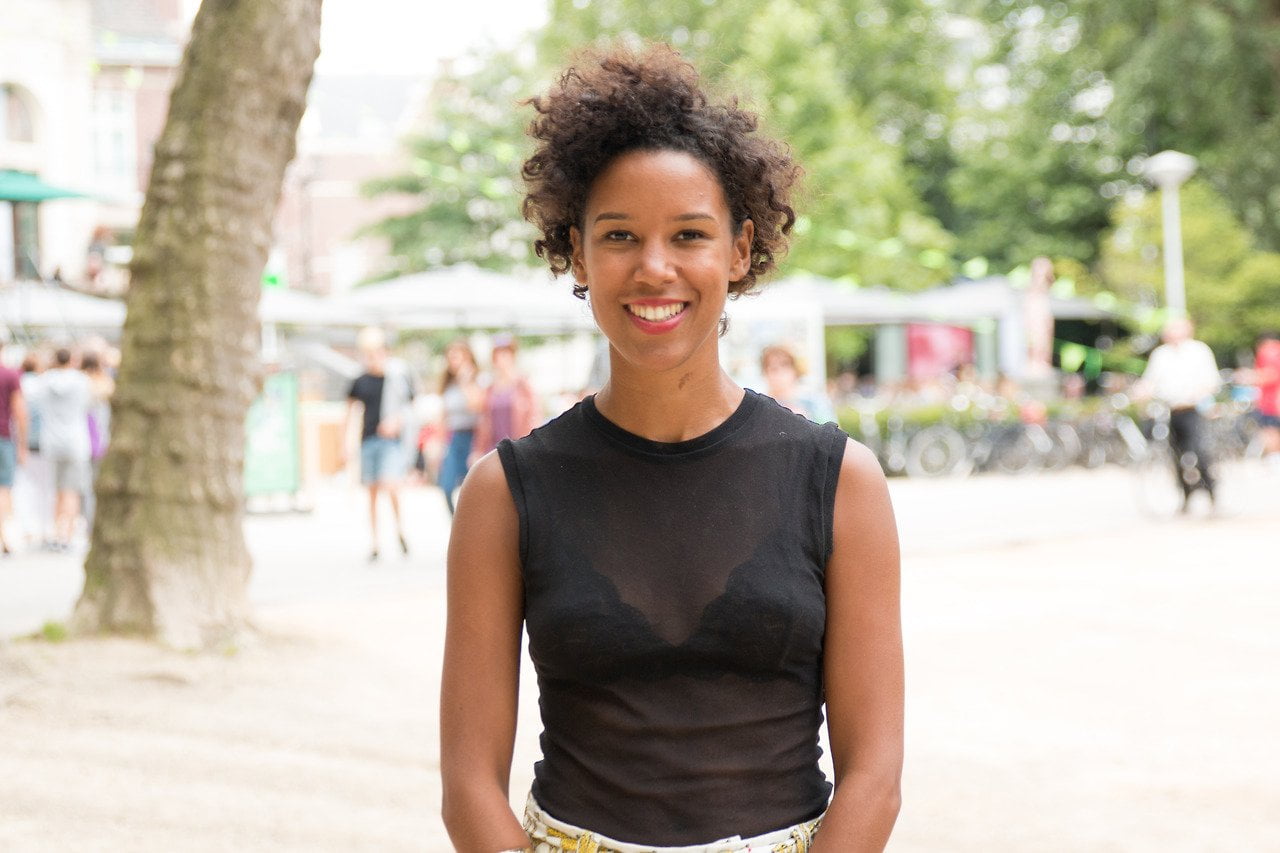
2/2 “My father is Dutch and my mother is from Suriname so I am a mix. In the past few years there have been a lot of debates about racism and many people are starting to speak out. For a long time, I wasn’t sure how to act in these discussions. Still I somehow felt that I needed to define my role within this new movement so I started to research the concept what it means to be an activist. I interviewed many activists and feminists. I became more aware of racism and I got more guts to speak out. For a while I would stand up whenever I would hear someone say something racist or sexist. I noticed that some people around me would take distance because of that. I sometimes would even go against my own father and I would point out the fact that he is a white man. Soon I also realized that it doesn’t work to drop little bombs everywhere I go. I realized I was losing nuance. I don’t want to look at my father as a ‘white man’, but as a person I don’t always agree with. I’m not only my skin colour either. Now I know that I can still be an activist and stand up for myself. I won’t be silent anymore, but but I don’t need to end up in a debate everywhere I go. Through my research I never really found an answer to what defines an activist but along the road I did find an activist within myself. ”
½ “I used to be an intern at a television network. Things were going really well and after two months we had our annual editors meeting. The editor in chief had prepared a presentation in which he summed up all the things the network had achieved that year. In the final slide of his presentation there was a caption that said: ’‘Diversity” and right underneath my name was written. When I saw my name up there I froze. I felt so ashamed and at the same time I wondered if they had just hired me because I was contributing to the diversity within the network and not because of my talent.“
“The biggest misconception people have about us is that we want to be women. I used to work in theatre but when I made a career switch I missed acting so I created Ruby Rouge (right).
My colleague’s name is Laloly. What we are doing right here is theatre but our audience isn’t sitting in a venue or behind a screen. Our audience is the whole wide world.”
When I left Syria the war just started. I was twenty-two when I got selected for a scholarship in Spain, Granada to study fine arts. Unlike many Syrians I came here on a visa and so I’m not a refugee. Before coming Spain I used to study art in Damascus and work as a DJ. While living in Granada I kept working as a dj and last summer I even got to go to Ibiza to perform with big headliners. It was such an amazing experience. After a few months I returned to my apartment in Madrid. All of a sudden I got a message from my best friend who lives in London. He is also from Syria and are still really close. He send me a ticket to come and hang out with him in Brussels for a few days. We have that kind of friendship where we send each other plane tickets. I went to Brussels and we had a lot of fun. When we got to the airport we both realized we didn’t want to go home so we said why not go to Amsterdam? We skipped our flight and we bought train tickets to Amsterdam. From the moment I arrived to Amsterdam Central Station I said to my friend: “This is it. I’m in love, I’m moving here.’’ He was laughing and thought I was joking but after a few days when I returned to Madrid I packed my stuff and moved to Amsterdam. That was about seven months ago and now I have finally found an apartment here and I’m excited for the future.”
——————————————-
I met Ribal at BenchesCollective – BankjesCollectief a really awesome initiative in Amsterdam which transforms public space into a meeting place for everyone. BenchesCollective is a movement that organizes the largest open-air café in the world consisting of ‘opened’ benches on the pavement in front of houses, in the park or on a city square. Together with BenchesCollective I created 2 portraits to share stories of those who are a part of the movement. I believe it’s initiatives like these and people like Ribal that make our city into this incredible place.
A bench host decides what he or she wants to serve: a nice cup of coffee, home baked cake, a marble competition or dancing lesson. At the opened benches you meet your neighbours. From students, young families and chatty grannies to awesome people like Ribal. The next open-air café is on July 1st & 2nd. It’s a really nice way to meet new people so if you are in Amsterdam next weekend make sure to check it out.
“Six months ago I had this crazy idea to start my own language school. I have always wanted to be an entrepreneur and since I was already teaching Dutch to expats I thought why not open up my own school. There are many language schools in Amsterdam but instead of just creating a place where people come to learn the language I wanted to build a community, a place where people can feel a sense of belonging. My students come from all over the world, Brazil, Mexico, North America but there are also students who left their country because of war and terror. In my school everyone is equal and we are all learning from each other, no matter if you are a student or a teacher. When I was living abroad in Mexico I noticed it was very hard to meet local people when you are a foreigner. That is why I introduce all my students to my friends. I set each of my students up with a language buddy so its easier for them to practice. Whenever there is an event I invite them. For example, last week we went salsa dancing and everyone loved it. So far none of my students have left the school and they even come early to class just to hang out. When someone doesn’t show up I know they have a legit reason and I’m genuinely worried. The best part of my job is that I get to spend my time with awesome people. A few weeks ago it was my birthday. I tried to keep it a secret but they had already figured out it out because of Facebook. Each of my students had thought of my birthday. They bought me flowers, wrote me birthday cards and they sang ‘’Happy Birthday’’ to me in 10 different languages. I’m not going to lie, it made me cry.”
———————————————
I met Noémie at BenchesCollective – BankjesCollectief a really awesome initiative in Amsterdam which transforms public space into a meeting place for everyone. BenchesCollective is a movement that organizes the largest open-air café in the world consisting of ‘opened’ benches on the pavement in front of houses, in the park or on a city square.
A bench host decides what he or she wants to serve: a nice cup of coffee, home baked cake, a marble competition or dancing lesson. At the opened benches you meet your neighbours. From students, young families and chatty grannies to awesome people like Noémie. The next open-air café is on July 1st & 2nd. It’s a really nice way to meet new people so if you are in Amsterdam next weekend make sure to check it out.




Recent Comments