
In the past ten days, I have been collecting stories of people whose childhoods were marked by the Srebrenica Genocide (1995) in Bosnia and Herzegovina. Starting tomorrow, I will begin sharing these stories on Humans of Amsterdam.
These are stories of survival, pain, hope, and strength. Each person photographed brought a personal item to the interview. This item is strongly connected to the person’s story and is often the only item they still have from the war. This series will give a unique and very personal insight into life before, during, and after the war in Srebrenica.
I created this series together with the War Childhood Museum from Sarajevo. An incredible museum that continuously focuses on researching and documenting stories of people whose childhoods have been affected by war.We hope you will learn more about the Srebrenica genocide, through the personal perspective of these courageous survivors, and share them with your community, family, and friends.
Each story is unique, but because many of them occur during the same tragic historic event, I want to give you a short explanation of what happened in Srebrenica 25 years ago. This way, you will be able to understand the context of these stories better.
—
In the summer of 1995, the Bosnian-Serb Army started an offensive aiming to overtake Srebrenica. Civilians from all over the area began taking refuge, and most of them went to Potocari, where the Dutch UN-Base was stationed. The UN-Base, used to be an old battery factory. To this day, people still refer to it as ‘the old battery factory.’
Within a few days, around 25.000 refugees arrived at the Dutch UN-base. About 6.000 of them stayed inside of the UN-Base, while the rest remained outside. On the 12th of July 1995, women and children were deported by buses to the safe territory, in Tuzla. Boys and men were separated and later executed. On the 13th of July, the Dutch UN-soldiers threw out the refugees sheltering inside of the UN-base. Amongst them were boys and men who were then captured by the Bosnian-Serb Army and later executed.
As rumors were spreading that, mostly boys and men were being captured at the UN-base by the Bosnian-Serb Army, many of them decided not to go to the UN-base. Instead, they tried to get to the safe territory (in Tuzla), 100 kilometers further, on foot. These boys and men walked in a long convoy, many of them were ambushed and executed. In total 8372, mostly boys and men, were executed during the genocide. Still, to this day, about a thousand people have not been found yet.

Processed with VSCO with e6 preset
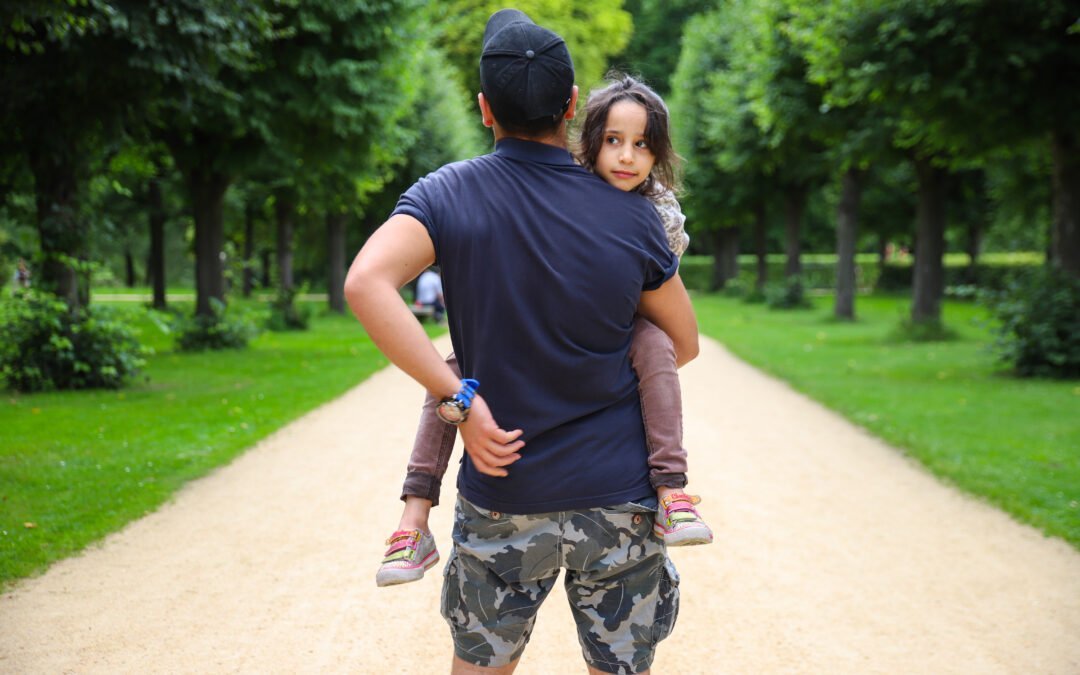
”Hannah has a twin brother who is still in Syria. She misses him a lot. I am her uncle but I take care of her like a father. Hannah is only seven but she is incredibly smart and she can’t stand injustice. The situation in Syria became too much for her. When her grandmother and I left,
her parents decided it was best for her if she would come along. She still misses her parents a lot and I obviously cannot replace them but I try to be here for her. Luckily she is a very strong girl. Strong like a lion.”
Hannah, 7 years old, from Syria (Berlin, Germany)

Processed with VSCO with e5 preset
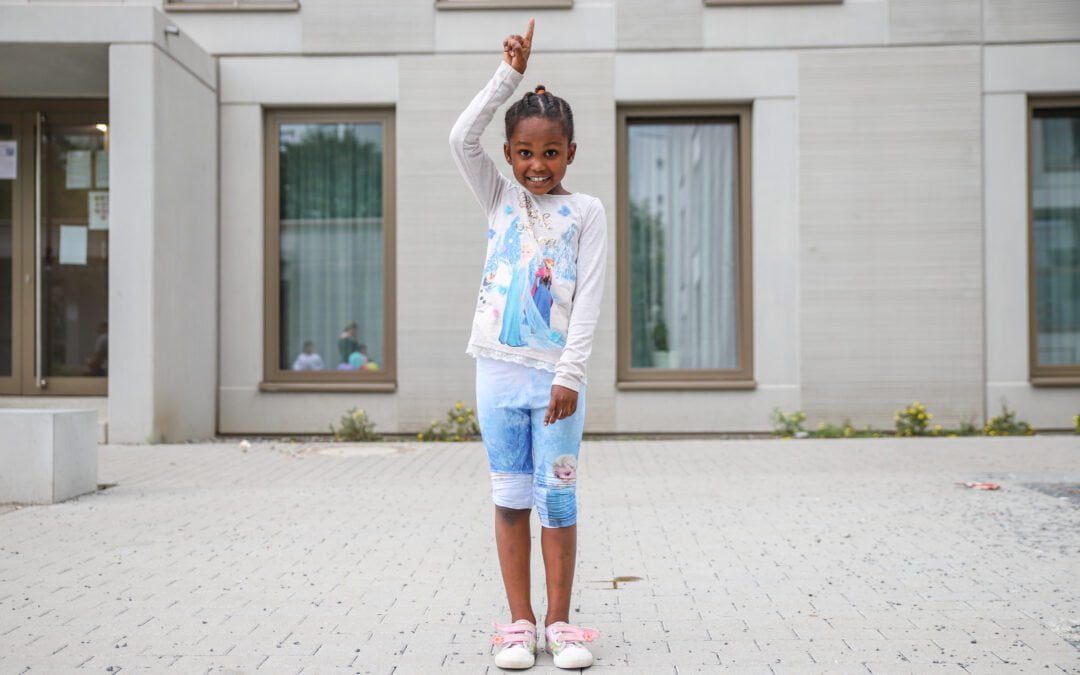
”My name is Marianne and I am exactly seven years old. I was born in Somalia. I am in Germany, for almost one year now and I like it here. I am learning German in school and I like it. My biggest dream is to own a bike one day. Here at the facility, we do have bikes but I want my own bike. Maybe then, if I bike really fast, I will be able to fly.”
Marianne, 7 years old, from Somalia (Berlin, Germany)

”Now that I live here, everything is different. I can become friends with both boys and girls, I can play soccer and I can wear whatever I want to wear. I love the traditional Afghan dress that I am wearing now. However, back home people would tell me to change my shoes because they are boys shoes. Here people don’t care if I wear these sneakers under a dress. My biggest dream in life is to set up a school for girls in Afghanistan so they can learn how to read and write. I want all the girls in Afghanistan to know that they can do anything boys can do.”
Madina, 16 years old, from Afghanistan (Brussels, Belgium)

Processed with VSCO with e5 preset
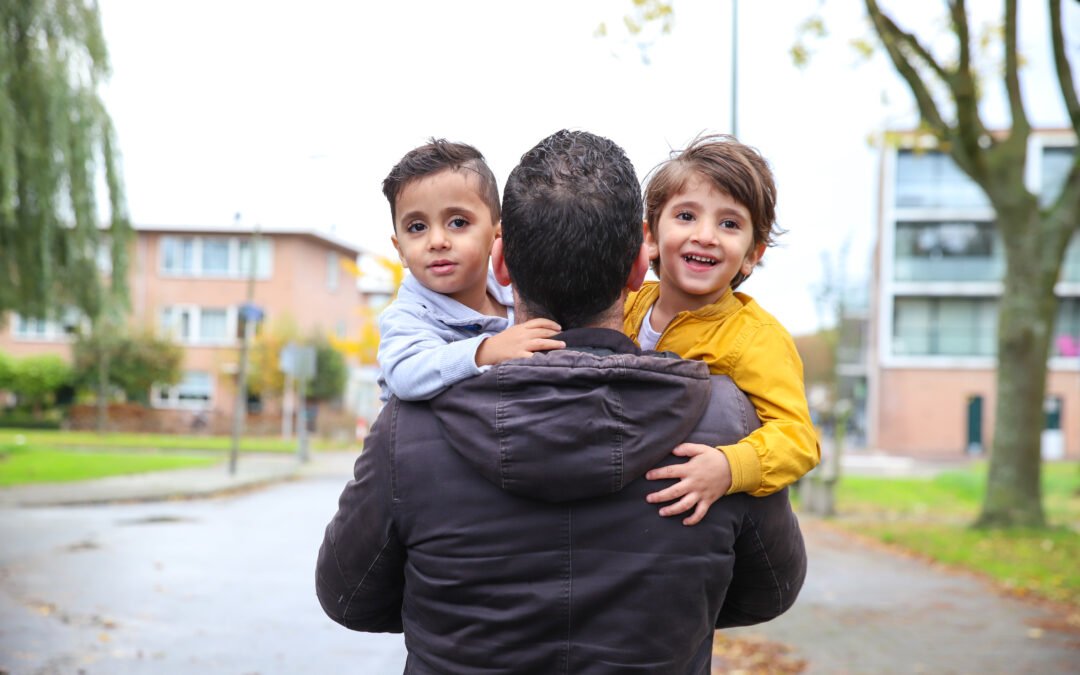
”Leaving them behind was the hardest thing I ever had to do. The situation in Syria was no longer bearable. I had no idea where I was going or whether I was going to survive the journey. I knew it would be dangerous so I decided to go by myself and have my family come over as soon as I would have something to offer them. As I had expected, the journey was really harsh. When I arrived in the Netherlands, I decided to stay. I was able to skype with my family but I missed holding them in my arms so much. I couldn’t focus on learning Dutch because I was thinking about my wife and children all the time. During the first months I stayed in an old prison building and I applied for asylum. After 8 months, having secured status in the Netherlands, I was able to start the procedure for family reunification. Day and night, I was busy to get my children and wife over here. Then the day came when they arrived at the airport. A friend of mine came along to capture the moment that I could finally see my sons and wife. Watching that video still breaks my heart. Now that they have been with me for a few months, I feel that our life can finally take off. What kept me going during the entire journey was the thought of that moment when I would finally hold my boys in my arms again. I just want them to grow up in a safe environment. Right now they are getting used to the life over here. I am just happy to see that they are very normal kids who love animals and playing games. I am so happy that they can have a future and no longer have to worry about bombs dropping from the sky.”
*Time and Majd, 4 and 5 years old, from Syria (Amsterdam, the Netherlands)





Recent Comments